 Facts checked Nov 16, 2026
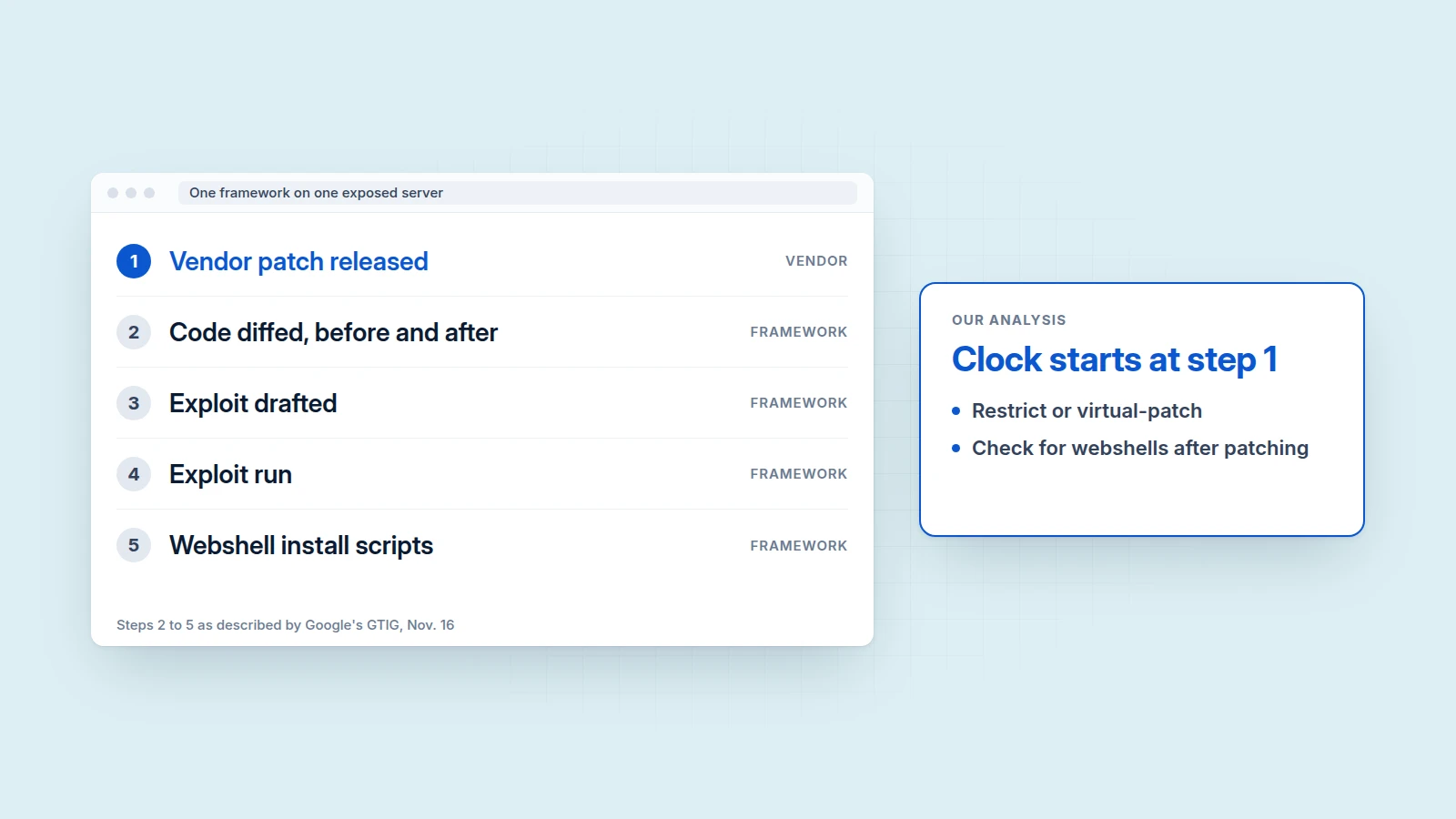
Google said Nov. 16 it found one attacker framework on one exposed server that diffs web-app patches and runs exploits unattended; we would start emergency patch clocks at the vendor's release.
What happened
Google's Threat Intelligence Group (GTIG) wrote Nov. 16 in its AI Threat Tracker (Aurora Blum, Kelli Vanderlee, Jess Xia and David Mainor) that it found an exposed staging server hosting a multi-agent framework it calls exploit_agent. GTIG said the framework "compares code before and after patch announcements," drafts exploits and "automatically executes them without human intervention." GTIG calls this the first time it has seen discovery and exploitation fully automated "without a human in the loop," a claim about this one framework.
The server also held scripts for internal reconnaissance, brute-forcing, "installing webshells, and removing other attackers' webshells," plus data exfiltrated from victims. GTIG said victim telemetry "suggests" the operator targeted French media and entertainment websites and the education sector.
PaperCut. GTIG says two chained PaperCut flaws (CVE-2026-81578, CVE-2026-82078) allow unauthenticated remote code execution (RCE) and were first exploited as zero-days, and that Huntress and other researchers used LLMs to build working exploits within a day of PaperCut's Aug. 27, 2026 advisory.
Four days after the advisory, GreyNoise saw a campaign. GTIG says the actor likely used LLMs; GreyNoise says it used AI agents built on OpenAI's Codex harness and a DeepSeek model against at least 440 instances at 395 organizations in 48 countries. Its timeline shows the actor diffing the pre- and post-patch builds and reaching first RCE on a real victim just under four hours after it created its workspace. It also logs a prompt for permission to continue, so the run was not human-free. GreyNoise saw domain admin at only 12 victim organizations, in 5 to 144 minutes (seven minutes at a US high school). GreyNoise says a Cloudflare WAF stopped the actor at least once.
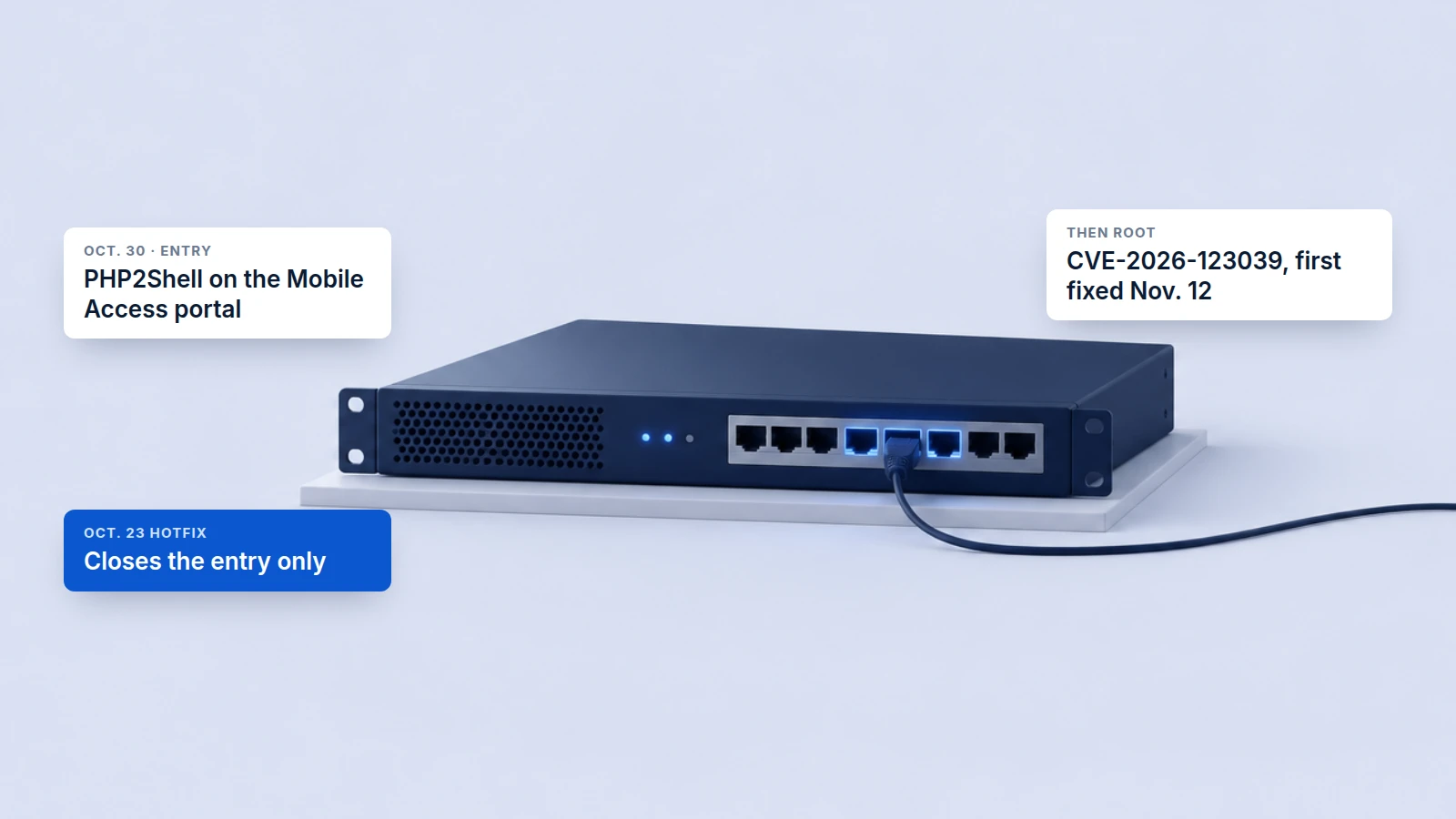
PHP. GTIG said a proof of concept (PoC) video and early patched code appeared before the Oct. 21 patches, followed by "hundreds of claimed but non-functional POCs, likely generated with the help of LLMs" (see our PHP item).
GTIG counts exploited zero-days at a 2025 average of 8 a month, 11 a month in 2026 and 22 in August. Overall disclosures and exploits "nearly doubled" from January to August, it says.
Who is affected
At risk are companies running popular internet-facing web apps and plugins, and PaperCut print servers. GTIG shows the framework inspecting access control code in a WordPress plugin, without saying it found a flaw there. GTIG names no US victim for exploit_agent; the US exposure is the method and the software.
What to do now
We would not wait for a working public PoC; the PHP fix drew hundreds of non-functional ones.
- Web platform owner, this week: list every internet-facing web app and plugin, each with an owner who can update it the same day.
- Security and IT leads, this week: for that tier, start the emergency clock at the vendor's security release, or at a visible fix in preview code, not at a KEV listing or a public PoC; we would set it in hours. Until patched, use compensating controls: restrict access, disable the component or virtual-patch at the WAF.
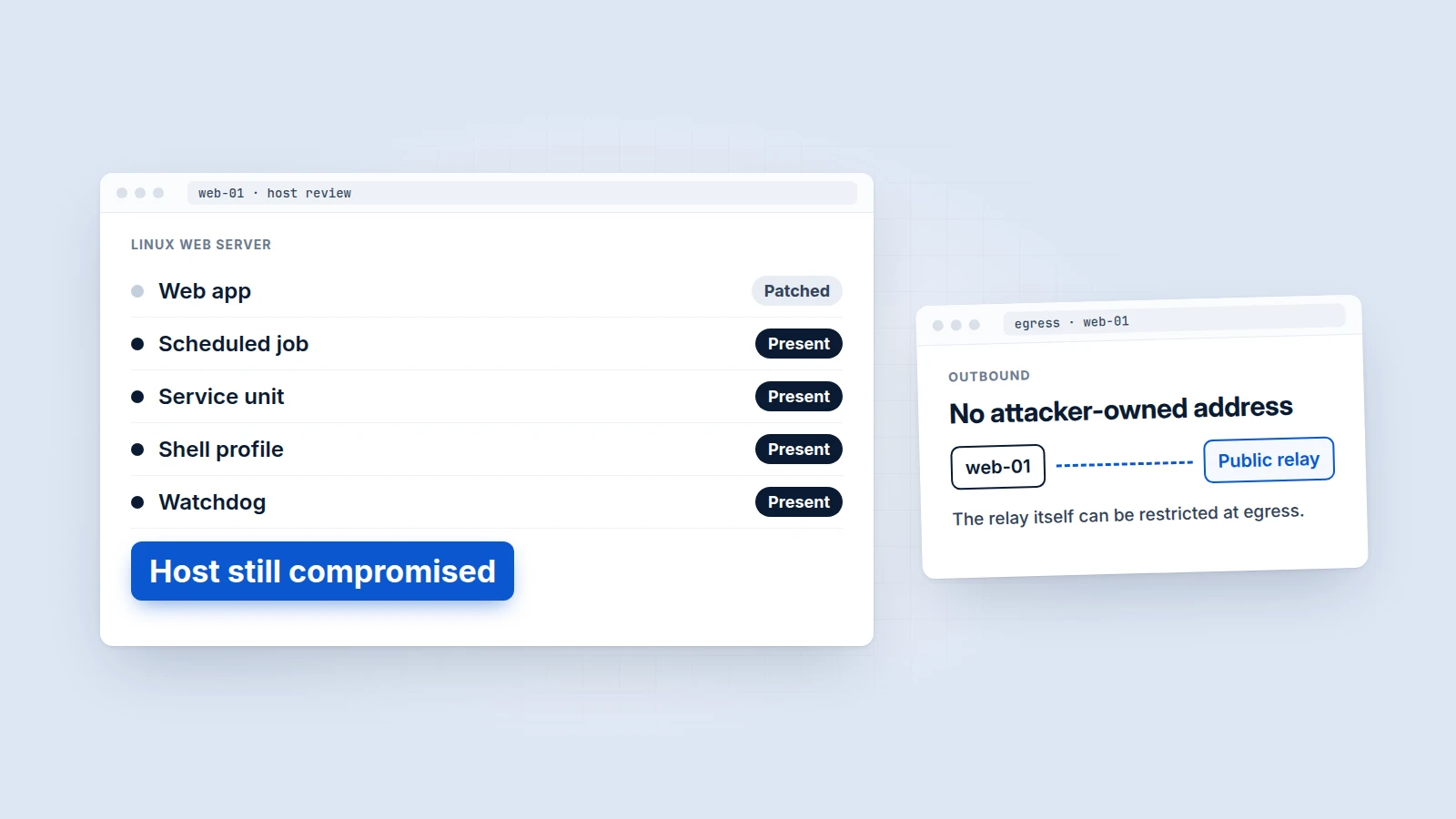
- SOC, within a day of each emergency patch: check for webshells and unexpected files, since exploit_agent's kit can plant them and a patched site can still be compromised, as with GSocket.
- Detection engineering, this month: GTIG says these frameworks "trade stealth for velocity," so tune volumetric and behavioral detection on web front ends.
What is not known yet
GTIG's report does not say which flaws exploit_agent exploited, how many sites it hit or who runs it. GTIG notes Russian-language comments in its config file; language is not attribution. So the report alone cannot rule you out.