Cleverbridge says a third party copied card data stored on its platform; software vendors selling through it should get the scope in writing and expect phishing under their own brand.
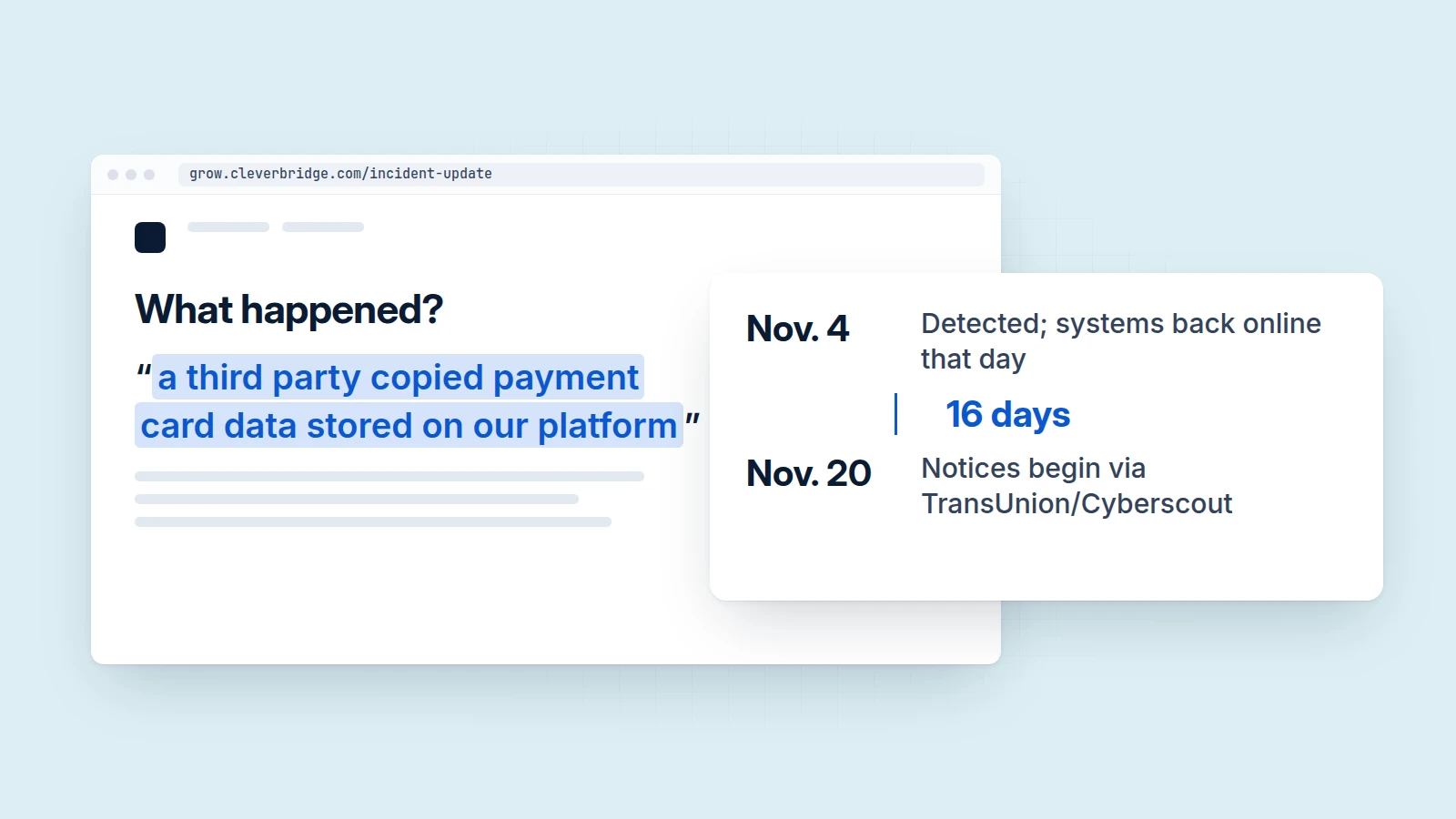
Cleverbridge, a merchant of record for software sellers, said on its incident page that it detected unauthorized activity on Nov. 4, 2026, took affected systems offline and brought all systems back online the same day. The investigation "subsequently determined that a third party copied payment card data stored on our platform," the company said. The page is undated; its HTTP header shows a last change on Nov. 21.
Cleverbridge said it began notifying individuals on Nov. 20 "where appropriate," 16 days after detection, through TransUnion/Cyberscout, which it calls legitimate. It said this was not ransomware and none of its systems were encrypted. It offers monitoring services "where available." It has not said when it determined that card data was copied. It says it notified people "without undue delay."
The public page says only that "payment card details" may be involved; a notice seen by BleepingComputer lists the card number, expiry date and card security code (CVV/CVC), and says no other personal data, such as name, contact or billing details, was copied. BleepingComputer also reported that Cleverbridge says it notified data protection authorities, law enforcement, payment card networks and payment partners. As of Nov. 22, the California attorney general's breach list had no Cleverbridge entry.
Who is affected
Anyone who bought from a business that sells through Cleverbridge may be in scope; Cleverbridge says it may have processed or managed those transactions. BleepingComputer reported that the company has not disclosed how many customers were affected, which businesses' customers were affected, how attackers got in, or how long they had access. Cleverbridge did not answer its questions, which covered encryption and why CVV codes were accessible. BleepingComputer lists several software companies as Cleverbridge customers; none is reported as affected.
What PCI DSS says about keeping CVV codes
The PCI Security Standards Council says in FAQ 1280 that "it is not permitted to retain card verification codes once the specific purchase or transaction for which it was collected has been authorized," that the rule "applies even if that data is encrypted," and that codes are "not needed for card-on-file or recurring transactions." The related rule is PCI DSS requirement 3.3.1.2. The FAQ also says PCI DSS "does not prohibit the collection of card verification codes prior to authorization." How a CVV came to be accessible here is unknown, so nothing public says Cleverbridge broke the rule.
What to do now
- Vendor security or partner manager, today: ask Cleverbridge in writing for scope by transaction date and storefront, whether stored cards for subscriptions are affected, whether it will reissue tokens or ask buyers for new cards, how the attacker obtained card security codes, and its current PCI DSS Attestation of Compliance date and assessor. Cleverbridge is the merchant of record and sends the notices; your contract decides what you are told.
- Support and communications, this week: send buyers a short note, and brief support staff, so both match Cleverbridge's notice: TransUnion/Cyberscout is a legitimate sender, and Cleverbridge will "never ask you for your card details, passwords, or security codes by email, phone, or text message."
- Fraud and support leads, from now through the end of December: watch for emails or calls in your brand's name about refunds or failed renewals, chargeback spikes, and renewal failures after any card reissue.
- Finance or card program owner, this week: check corporate and purchasing-card statements for Cleverbridge charges as far back as records go, and ask the issuer to reissue cards that were used.
- Security engineering, this month: run cardholder-data discovery across logs, databases, support tickets and call recordings for CVV-length fields next to card numbers.