 Facts checked Nov 22, 2026
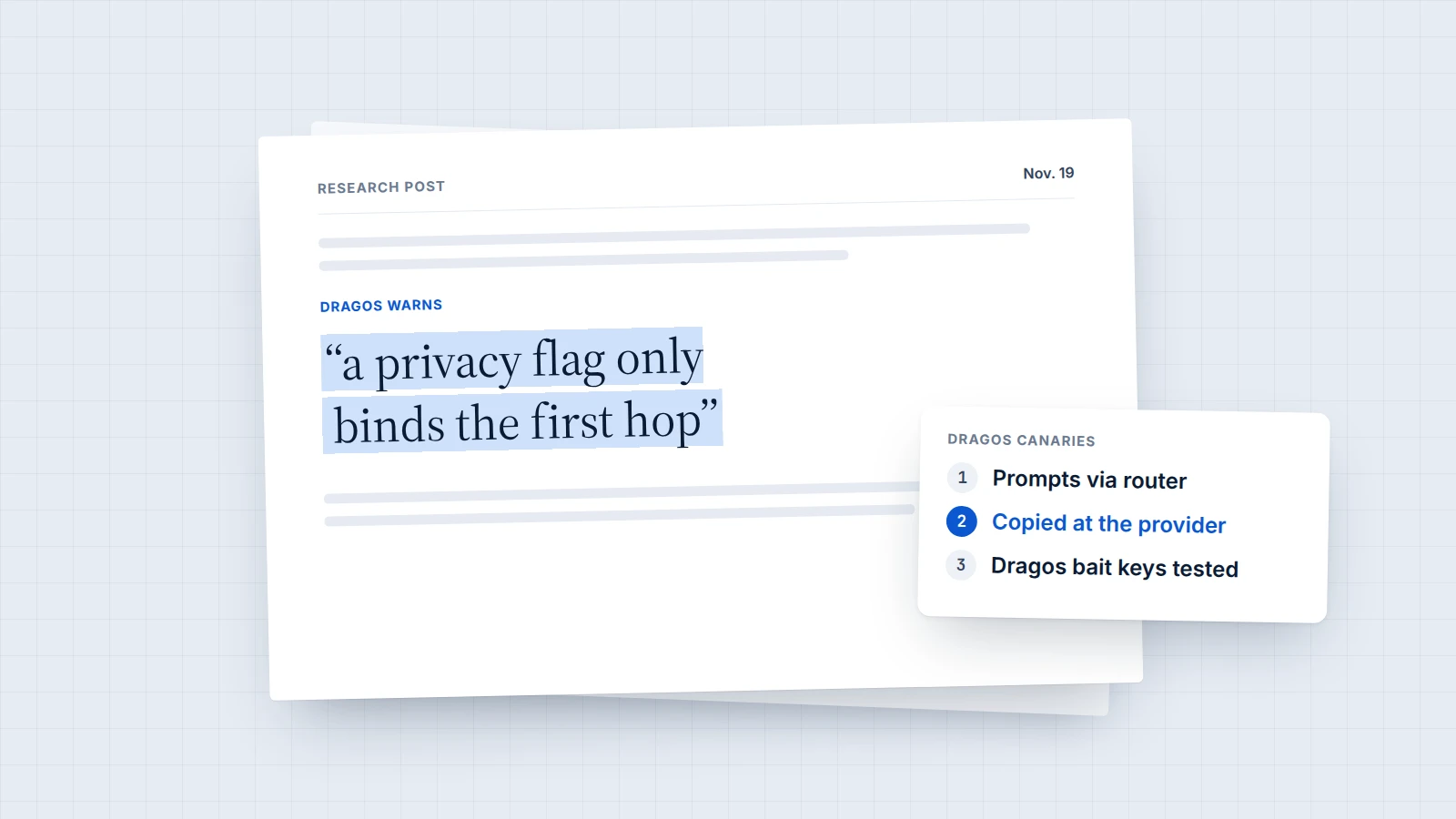
OpenRouter said on Nov. 22 it off-boarded three unnamed inference providers and removed 125 endpoints from Zero Data Retention (ZDR) eligibility. Rotate secrets sent through an affected provider and pick the hosts behind the router yourself: Dragos warns that "a privacy flag only binds the first hop".
What happened
OpenRouter's notice says some of the 125 removals were a precaution and that it notified all potentially affected customers, including those of providers that have not posted. It said findings "did not show any breach or unauthorized access of OpenRouter".
Dragos wrote on Nov. 19 that about two million canary-seeded prompts, sent July through November, showed attackers stealing data at three hosting providers, earliest in mid-July; real requests were "almost certainly copied". Marketplace resellers retained prompts through ordinary request logging, and a Chinese AI lab appeared not to honor privacy settings, Dragos says. It does not name the three providers or the lab, or say which marketplace's sellers kept prompts.
In two of the breaches, Dragos found some stolen requests marked ZDR. A flag does not stop an intruder at the provider, but we would not call it useless: Together is making ZDR the default for new accounts.
Providers that posted (OpenRouter lists them as announcements received, not as the three it cut, and does not say which had data "compromised" and which did not uphold data policies; only Together mentions Dragos):
Provider | Requests | Window |
|---|---|---|
Phala | DeepSeek V4 Flash 0731 routed by OpenRouter | Oct. 21 00:00 UTC to Nov. 8 05:35 UTC |
Novita | MiniMax models, directly or through OpenRouter | May 28 to Nov. 11, 2026 |
Together | MiniMax M3, GLM-5.2 and Kimi K2.6 | primarily June 24, July 4, July 8 and July 14, 2026 |
Phala said to treat contents as exposed and rotate secrets, though it said only canary credentials from requests sent on Oct. 21 and 22 were subsequently misused, so we read the rest of the window as precautionary. Phala saw misuse of stolen data until Nov. 9.
Novita did not describe an intrusion. It said some requests were forwarded to MiniMax's official API because of "a routing configuration issue", that contents "may have been accessed or retained by a third party", that "No use of the AWS test key markers was observed", and recommended "revoking or rotating" secrets as a precaution.
Together, the only provider naming Dragos, said an AI coding agent committed a credential to its public GitHub repository, exposing prompt samples stored for testing. The party that obtained them searched them for credentials to other services and tested whether they were valid. Review is ongoing; Together will contact affected customers directly as needed.
Who is affected
Companies may be affected if one of these providers served their requests in those windows, whether sent directly or through OpenRouter, or if OpenRouter notified them about a provider that has not posted. Users of reseller marketplaces face the logging risk Dragos describes.
What to do now
- Platform lead and security engineer, today: check the account owner's mailbox for an OpenRouter notice, match traffic to the windows, and rotate secrets that may have been in those prompts. OpenRouter's activity API names the provider serving each endpoint, but only for the last 30 completed UTC days; as of Nov. 22 that misses Oct. 21-22, the Together dates and most of Novita's window. Do not rule yourself out from the public list.
- SOC, this week: if AWS keys may have been sent, hunt CloudTrail from the start of the applicable window for Dragos's sequence: tested each key (sometimes within hours), listed S3 buckets, searched Secrets Manager and Parameter Store, then tried to enable Bedrock models, create Bedrock API keys and add their own IAM users. Dragos counted tens of thousands of calls; one key was still in use three weeks later. Alert on user agents
artex-agentandartex-judge-r121; the tooling moved from a script posing as Chrome on Windows to Boto3 in OrbStack to the AWS CLI on Kali Linux. Dragos says one rented server used secrets from two providers; only a small fraction of traffic self-identified, so the sequence matters more. - Privacy lead, this week: if prompts carried personal data, run breach assessment as a vendor incident.
- Platform lead and vendor-risk owner, this month: pin upstream providers, verify ZDR settings change where requests go, keep reseller marketplaces out of sensitive work, and require vendors to name inference hosts as subprocessors, with ZDR and breach notice in the contract.
- Security engineer, this month: scrub secrets before requests leave and seed a canary credential in pipeline context; treat any use as an incident.
What is not known yet
OpenRouter names none of the three, and Dragos said on Nov. 19 one provider had not disclosed. No provider says whether real customers' secrets from prompts were used: Together says the unauthorized party tested credentials it found in the samples, five of them Dragos canaries, and Phala confirmed misuse of some stolen credentials belonging to one hosting customer, taken in the same incident. As of Nov. 22, no provider gives counts of affected requests or inference customers.