 Facts checked Nov 20, 2026
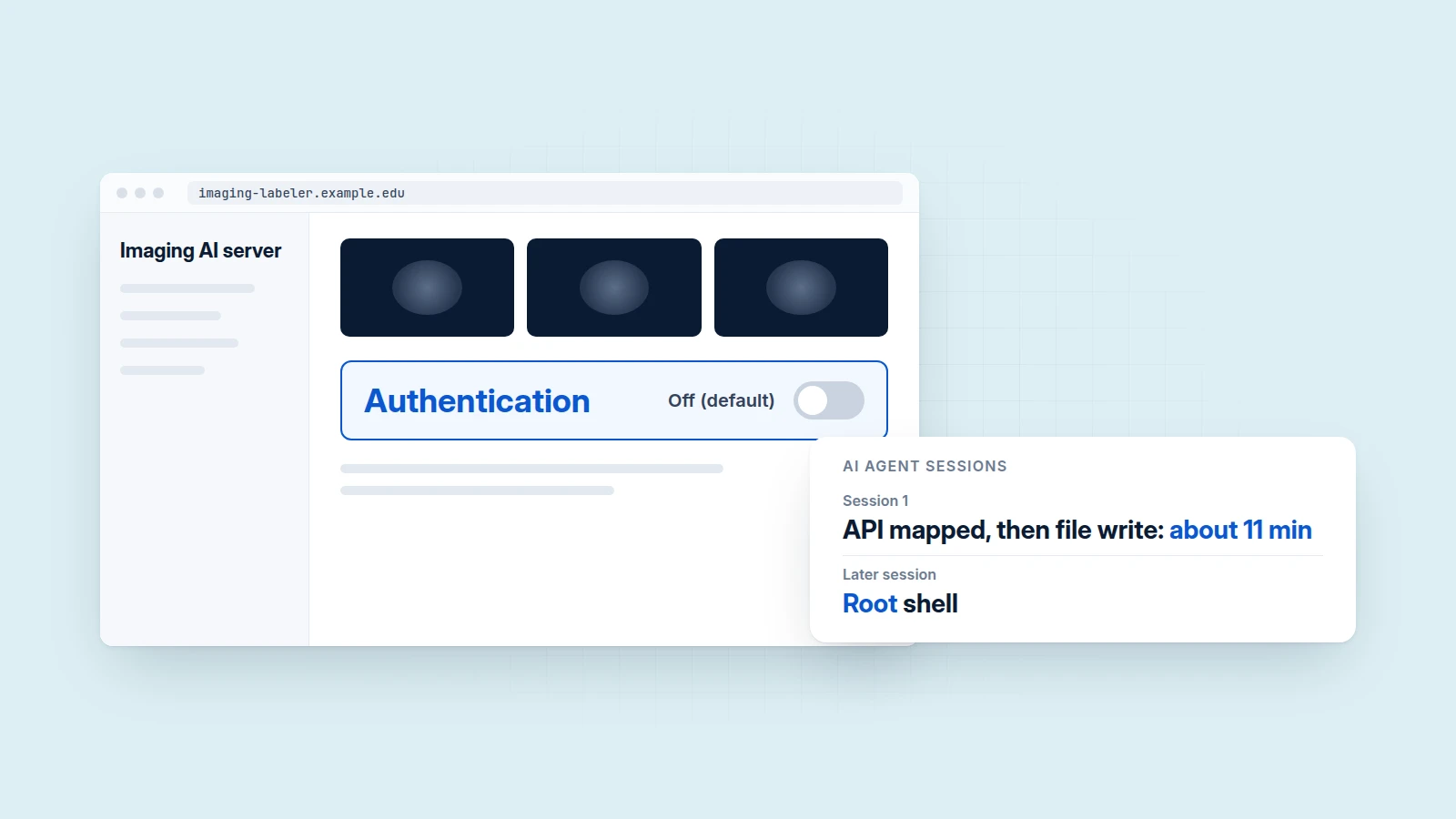
Amazon says AI agents given a list of target IP addresses and variations of the goal "obtain shell access" found an unreported flaw in an open-source medical imaging AI server and got root. No fixed release exists, so for self-hosted ML tools, exposure and authentication are the controls.
What happened
On Sept. 10, 2026, Amazon Threat Intelligence found an exposed Cairn instance, an open-source autonomous AI penetration-testing framework, running without authentication. Analysis of the instance showed a campaign against university IP addresses in East Asia outside mainland China, about 48 hours from Sept. 8. The agents planned and adjusted "without the operator choosing each next step," Amazon wrote.
Against one server the agents identified the application's framework, mapped its API and found an upload endpoint with a filename parameter. In about 11 minutes they went from mapping to writing arbitrary files. In a later session they wrote a Python reverse shell into sitecustomize.py, which Python imports at startup, triggered a training endpoint to start a new Python process, and got a root shell. Amazon assesses with high confidence this was a zero-day: no fix, issue, advisory or prior mention in vulnerability databases.
Amazon's post calls the target "an open-source medical imaging AI application" and does not name it in its text, but links to the project's advisory, GHSA-qc22-rmgc-vg94, which describes a path traversal in MONAI Label upload endpoints and credits AWS with the original report. It does not mention Cairn or these victims.
Two other operations failed. Against Redis configured without authentication, the agents spent about 16 hours and 148 sequential actions, Amazon wrote; they mapped the internal Docker network through an SSRF flaw in a co-located Qdrant instance, but credential sprays failed. Over more than 6 hours, against a GPU server they built about 80 usernames from faculty directories and papers and tried more than 30,000 credential combinations across SSH and other university systems, including a VPN and admin dashboard. No login worked.
In another session the actor gave the agents a proxy that tunneled into a second university network; the server it connected to ran the same software, and Amazon writes "we infer" the actor had used the zero-day to compromise it. Amazon assesses with moderate confidence that the actor is Chinese-nexus, based on Simplified Chinese prompts, China Standard Time timestamps and targeting. The affected organizations were non-AWS customers, notified through a government partner.
Who is affected
Anyone running MONAI Label reachable by untrusted networks. The advisory lists <= 0.8.5, and says authentication is off by default, so any client that can reach a default server can exploit it; with authentication on, the ANNOTATOR role is enough. Amazon does not say how the victim was configured, though it says the reverse shell ran as root. In our view, the same applies to any ML server a team runs outside IT's inventory.
Amazon names no US victim. Separately, Google said on Nov. 16 it observed Cairn used against targets including the aerospace sector in the US; Google does not link that activity to the campaign Amazon describes.
What to do now
- Security engineering, this week: from firewall, cloud and DNS records and by asking data teams, list ML servers reachable from outside (labeling servers, GPU login nodes, vector databases, Redis). Move them behind VPN or SSO.
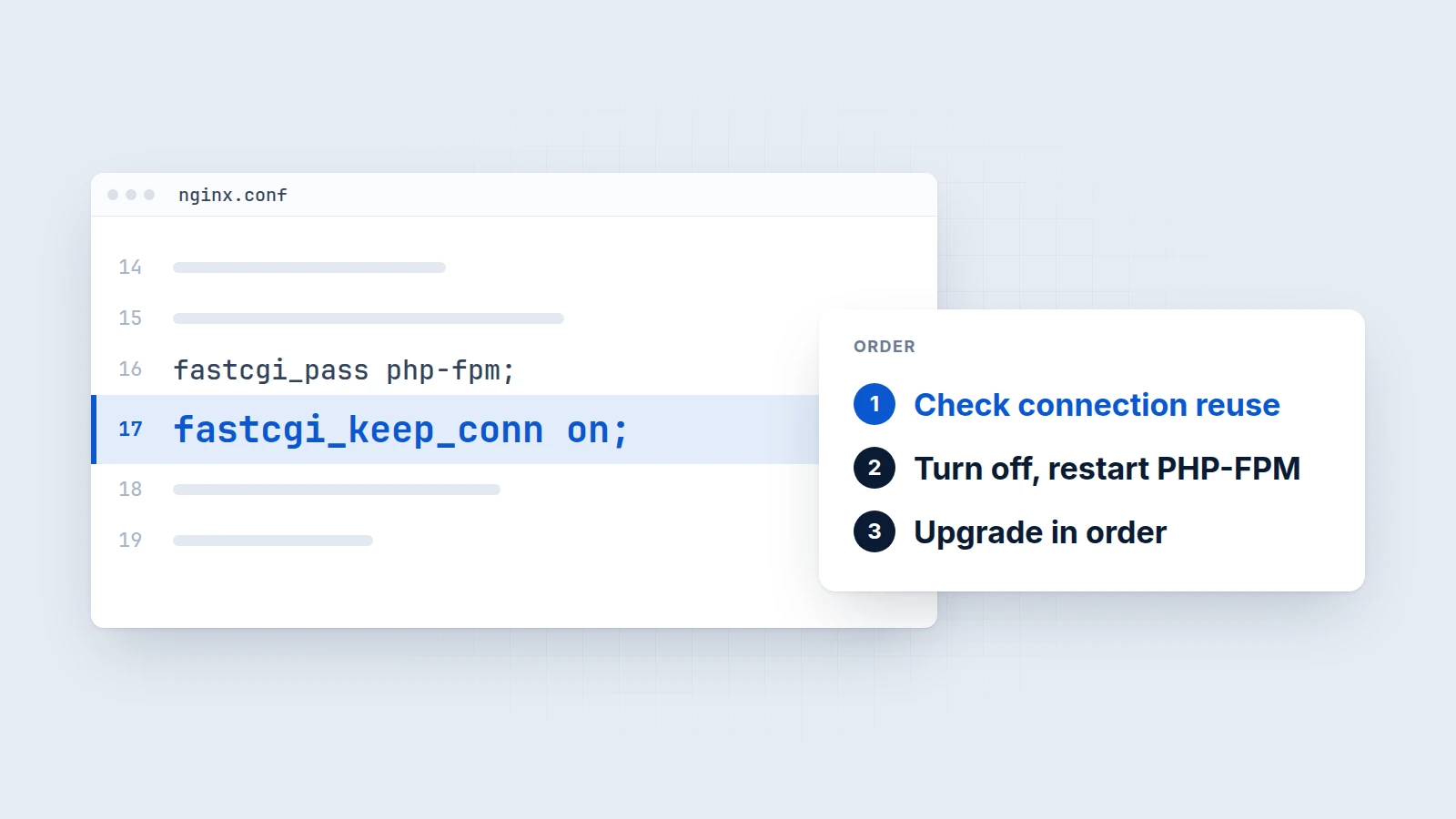
- Teams running MONAI Label, today: set
MONAI_LABEL_AUTH_ENABLE=True, withholdANNOTATORfrom untrusted users, and run the server as an unprivileged user with write access limited to the datastore directory. These are the advisory's workarounds. - SOC, this week: alert on new or changed
sitecustomize.pyon ML hosts and on Python processes there spawning shells. Search logs for 142[.]4.98.145 and 142[.]4.107.34, which Amazon lists in records dated Sept. 8-10. - Identity team, this month: alert on spraying across SSH, VPN and portals together, not per service.
- SOC lead, this quarter: Amazon says to prioritize high-confidence detections that trigger automated response, with humans overseeing outcomes. Set it up for these hosts.
What is not known yet
As of 22:28 UTC on Nov. 20, the latest release is 0.8.5. The advisory lists no patched version and no CVE, and says the fix, merged in source on Oct. 19, "will be included in the next MONAI Label release." Amazon wrote the maintainers "released a fix"; Nov. 18 is the advisory date, not a release date. We do not know the release date or whether other servers were hit.