 Facts checked Nov 27, 2026
Todoist says an attacker with a stolen version-control credential edited CI workflows, pulled a staff sign-in admin credential through an automation workflow and reached customer data. In our view, any CI job holding an identity- or cloud-admin credential is one workflow edit from anyone with repo write access, and companies whose staff connected Todoist for Outlook should check their tenant today.
Todoist published Nov. 24 and expanded the page Nov. 25.
What happened
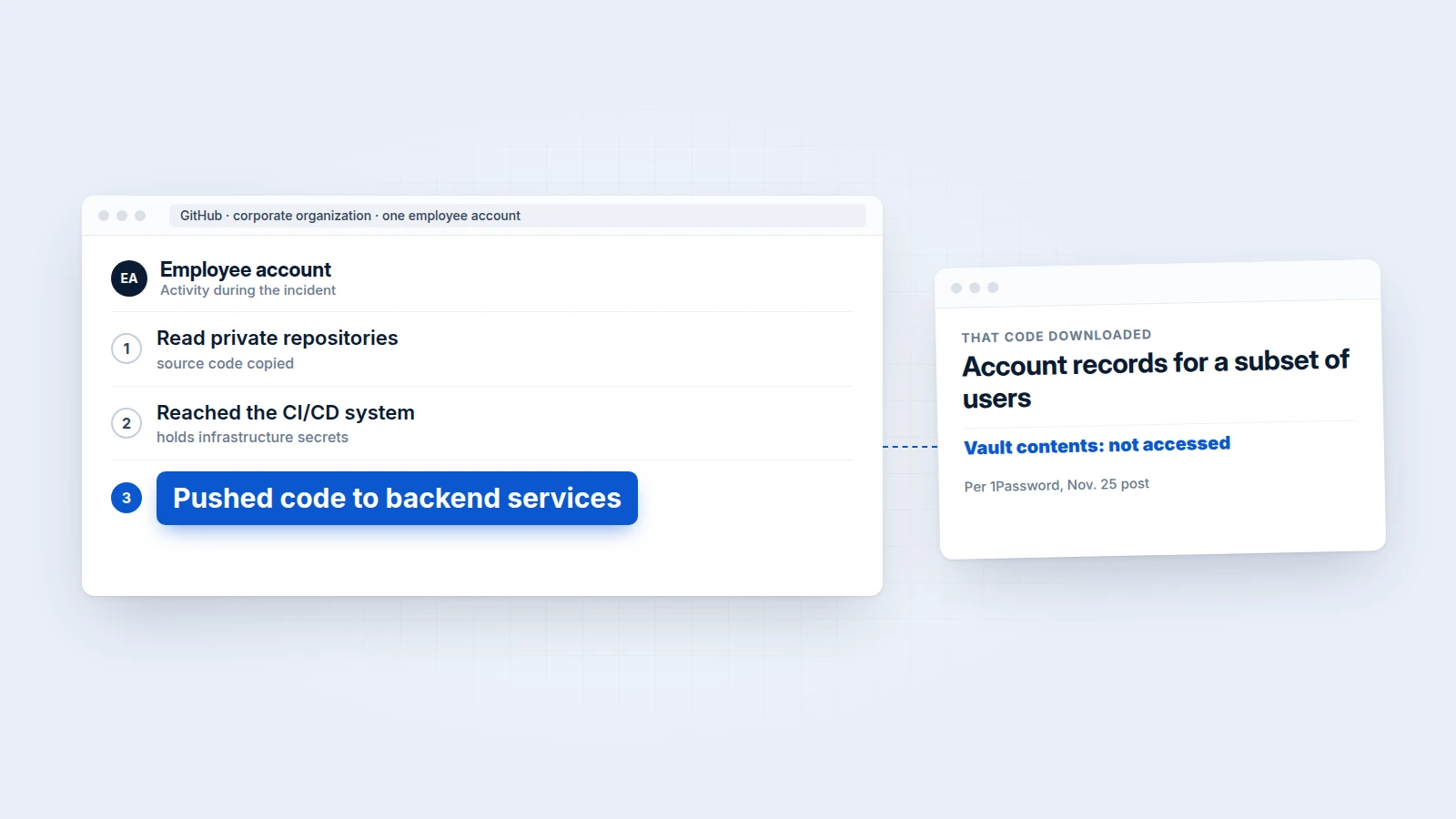
Todoist said the attacker used a stolen credential "associated with our version control system" to modify automated workflows in three repositories and obtain more credentials. It said the attacker could read source code and that its investigation found "no changes to application code."
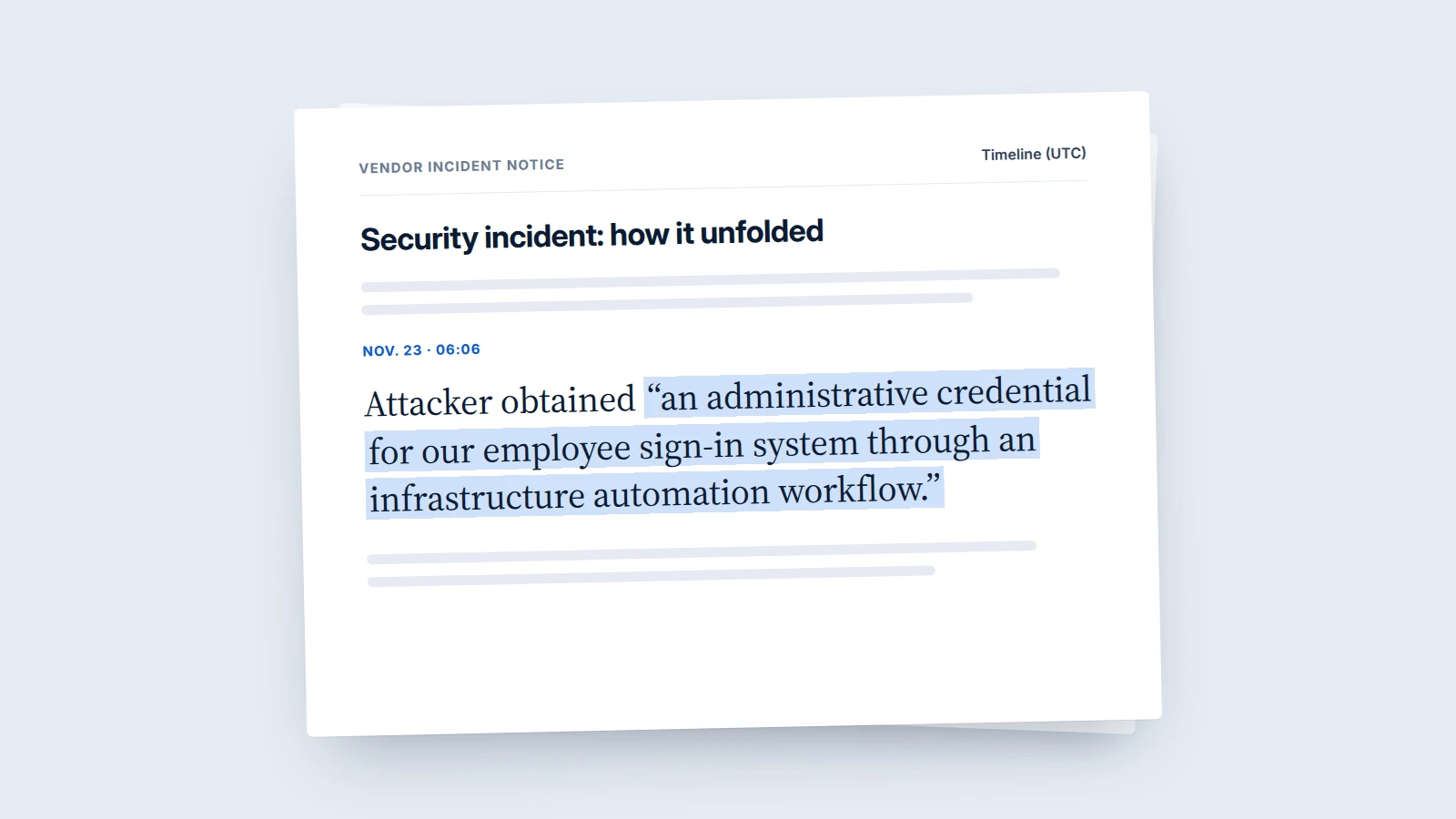
Todoist's timeline (UTC) puts the first identified use at Nov. 22, 14:04. On Nov. 23 at 06:06 the attacker obtained "an administrative credential for our employee sign-in system through an infrastructure automation workflow." From 06:33 to 06:54 it changed an employee's authentication settings and signed in to cloud infrastructure as that employee. At 08:20 it created accounts to maintain access, from 09:08 it accessed production databases and ran commands, and at 12:45 it exported account records.
Todoist began investigating at 17:01 after security monitoring identified "an unexpected administrator account." That is about 27 hours after the first identified workflow edit and about 11 after the attacker took the admin credential.
Todoist has not established how the attacker first got the credential; its leading theory, unconfirmed, is a compromised employee device.
Who is affected
Todoist gives approximate shares, not counts, and no US figure.
- About 6% of users: email addresses, salted SHA1 password hashes and account creation dates. Todoist found no indication the attacker signed in to those accounts.
- About 0.003%: Todoist API and Slack integration tokens; for a smaller subset, project, task and comment data through the /sync endpoint.
- About 0.001%: content resembling credentials was matched.
- About 0.001%: connected Outlook accounts. Todoist said the attacker used stolen add-in credentials to request subjects, senders, previews (up to 255 characters) and attachment names, file types, sizes and links for the 10 most recent messages in selected mailboxes, and keyword searches of up to 25 or 50 results per mailbox, not full bodies.
Twist, Doist's other product, says about 3,600 users' connected-app tokens were exposed and the attacker added an admin account in one workspace.
Some older accounts still had SHA1 hashes because their passwords had not been changed "since we stopped using that method over a decade ago," and Todoist says it "should have retired support for it sooner."
What to do now
Todoist's advice: watch for phishing imitating its emails (the real sender is no-reply@notify.todoist.com); rotate any secret stored in tasks or comments, since deleting does not invalidate a copied one; replace API tokens in scripts; restrict or replace "anyone with the link" shares. Reconnecting Outlook means approving a new app that may appear unverified; a work tenant may block it.
Ours:
- Microsoft 365 admin, today: check whether Todoist for Outlook holds consent in Entra ID enterprise apps, then search MailItemsAccessed records for users who granted it on Nov. 23. Do not count on them to show search terms or name the app.
- Platform security, this week: list which workflows can reach identity-provider or cloud-admin credentials, and whether a changed workflow on any branch can run with them (Todoist restricted which changes can trigger sensitive workflows). Our 1Password piece has the repository-account checklist.
- Detection engineering, this week: we count four earlier alert points in Todoist's timeline: workflow-file edits (Nov. 22, 14:04), a workflow releasing the sign-in admin credential (06:06), an authentication-setting change then a cloud sign-in (06:33), and new accounts (08:20). Alert on each, and on new access keys.
- Identity team, this month: shorten credential lifetimes (Todoist enforced short token lifetimes on Nov. 24). If you run your own logins, rehash on login and force resets for dormant legacy hashes.
What is not known yet
With the entry route unknown, you cannot rule it out in your own setup. Todoist names neither its version-control nor its cloud vendor.